



7 reasons why you should replace your mattress every 8 years
Most mattresses need replacing every 7 to 8 years, according to the National Bed Federation's consumer advice service. After that point, they typically lose their shape and support that keep you comfortable at night.
However, you don't always have to count down the days on your calendar to know it's time. From nagging back pain to a mattress that's started to feel more like a hammock, there are plenty of signs that your bed is trying to tell you something.
In this post, our TV Bed experts explore 7 signs it might finally be time for a new mattress.
How often should you choose your mattress?
As a general rule, expect a mattress to last 7 to 8 years before it starts to lose its support, according to the National Bed Federation's Bed Advice UK Service. The Sleep Foundation puts the window slightly wider, at 6 to 8 years "under normal conditions".
Either way, the exact number depends on what your mattress is made of. Memory foam mattresses tend to last longer, while traditional pocket sprung mattresses can start sagging sooner as the springs lose tension.
If your mattress is reaching that age, or you're already noticing some of the signs below, it's worth considering investing in something new.
Signs it's time to replace your mattress
1. Your mattress has started to sag or show visible dips
Typically, this is one of the easiest signs to spot.
Run your hand across the surface, or take a good look when the bed is stripped. If you can see a dip where you usually sleep, or the mattress no longer springs back into shape, it's no longer distributing your weight evenly. That means more pressure on certain parts of your body all night, every night.
2. You're waking up with aches, stiffness, or back pain
A mattress that's lost its support can't hold your spine in a neutral position anymore, which often shows up as stiffness or lower back pain first thing in the morning, that tends to ease once you've been up and moving for a while.
If that sounds familiar and your mattress is more than a few years old, the two are probably connected.
3. It's affecting your sleep quality
Tossing and turning, waking up through the night, or just generally feeling like you haven't had a proper rest can all point back to an ageing mattress.
According to Bed Advice UK, an unsupportive mattress can cost you up to an hour of sleep a night, which adds up to a lot over a year.
4. It's harbouring years of sweat, skin cells, and dust mites
It's not the most pleasant thought, but every mattress absorbs sweat and shed skin over time. In fact, Bed Advice UK estimates around half a pint of moisture and roughly a pound of skin cells per year, per sleeper.
That build-up creates the perfect environment for dust mites, which can trigger allergies and make breathing less comfortable at night. A mattress protector helps slow this down, but it won't stop the clock indefinitely.
5. Your body or circumstances have changed
A mattress doesn't have to be old to be wrong for you anymore.
Significant weight change, a new sleeping partner, pregnancy, or a change in job that means more time at a desk or on your feet can all shift what you need from a mattress – even if it's still well within its lifespan.
6. You get a better sleep away from home
If you regularly return from a hotel stay or a night at a friend's house having had a better night's sleep than you do at home, take it as a sign.
It's a simple, reliable way to compare your current mattress against a fresh one without spending a penny – sometimes called the "hotel test".
Consistently sleeping better elsewhere is a strong hint that your own mattress is well overdue an upgrade.
7. It's reached (or passed!) the 7-8 year mark
Sometimes, there's no single, dramatic sign – a mattress just quietly gets old.
If yours is around 7-8 years old, it's worth checking it over even if nothing feels obviously wrong, since support tends to fade gradually rather than all at once.
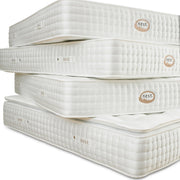
How long you can expect it to last depends on the type: memory foam mattresses, like our Nest mattress collection, often perform well for 8 to 10 years, while pocket sprung designs can need replacing closer to the 5 to 7-year mark as the springs lose tension.
Brands such as Sealy, Silentnight and our own Nest range offer a range of builds to suit different sleep styles and budgets, many backed by guarantees of up to 10 years for additional peace of mind.
How to increase mattress lifespan
Whether you've just replaced your mattress or are planning to buy a new one, a few simple habits can help it go the distance:
- Rotate it regularly (check the manufacturer's guidance – some also recommend flipping) to help it wear evenly.
- Use a mattress protector to guard against sweat, spills, and dust mites.
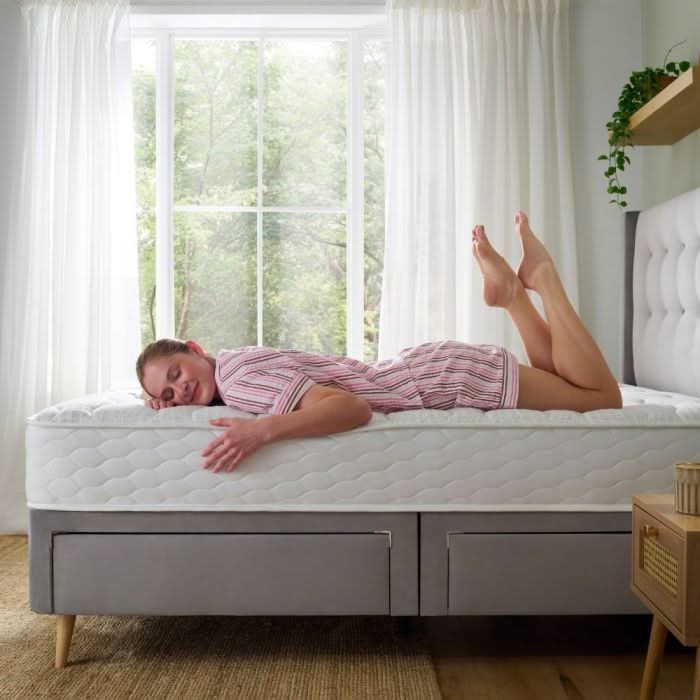
- Make sure it's properly supported by a suitable base or frame – poor support underneath can shorten a mattress's life regardless of quality. All our TV bed frames act as the perfect base.
- Avoid consistently sleeping on just one side or edge, which can accelerate sagging in that spot.
Time for a new mattress?
Whether you're planning ahead or already losing quality sleep at the hands of your old mattress, we have a selection in stock that is the perfect fit for our TV bed frames.
For help choosing the perfect new mattress, or to find out more about our collection, get in touch with our expert team today!