



FAQs
What size TV beds can I choose from?
What size TV beds can I choose from?
Can I pay for my TV bed on finance?
Can I pay for my TV bed on finance?
How soon can my slate grey TV bed be delivered?
How soon can my slate grey TV bed be delivered?
Built for proper comfort
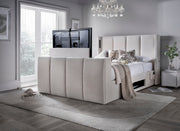
We at TVBed.co.uk appreciate that time, space and sleep is now moreimportant than it has ever been. Our goal is to be a 'one stop shop' whenbuying a TV Bed with mattresses we have developed passionately with ourpartners to offer optimum comfort & support suited to our bed frames. TV'shave been selected to guarantee fitment to your TV Bed when purchasedwith your bed.
TV Bed Blog

Everything you need to know about space-saving beds: Storage, sizes, and styles for small bedrooms
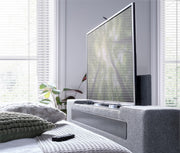
If you've ever tried to fit a double bed, wardrobe, and chest of drawers into a box room, you'll know how quickly floor space disappears. Space-saving beds are designed to solve this issue - combining a proper night's sleep with the kind of built-in storage that would otherwise need a whole extra piece of furniture. Whether you're furnishing a studio flat, a compact bedroom, or a spare room that pulls double duty, there's a space-saving bed to suit your square footage. In this guide, our experts at TV Bed explore the options available and how to choose the perfect fit for your home. Benefits of space-saving beds with built-in storage The biggest benefit is a no-brainer: you get all the storage space you need without sacrificing floor space. Ottoman beds use a gas-lift mechanism to raise the entire mattress platform, turning the space underneath into generous hidden storage — the perfect place to keep spare bedding, out-of-season clothes, or anything you want to store neatly out of sight. As that storage lives inside the frame rather than beside it, you can avoid extra wardrobes or under-bed boxes cluttering the room. Slimmer, low-profile frames help to save space, too. A bed with a lower headboard and a compact footprint reduces visual bulk, which makes a small room feel more open before you've even put anything away. And because everything is built in, storage beds keep bedrooms looking tidy day-to-day, rather than relying on you remembering to put things away. Our ottoman TV beds combine all of this with a hidden, electrically operated TV lift, so you get the storage benefits of an ottoman base and a proper entertainment setup in one — all without eating into your floor space! Where (and why) you might need a space-saving bed Space-saving beds earn their keep in a handful of situations. Studio flats are the obvious one: when your bedroom, living room, and storage all have to share one space, a bed that doubles as storage does a lot of heavy lifting. Small or box bedrooms benefit from under-bed storage for the same reason, particularly in older properties or new builds where fitted wardrobes were never part of the plan. They're just as useful in rented homes, where you can't always alter the room to add built-in storage, and in spare or guest rooms that need to earn their keep the rest of the year - providing somewhere to store bedding, luggage, or seasonal items without becoming a permanent junk room. If any of this sounds familiar, an ottoman storage bed is usually the simplest fix. One purchase replaces what would otherwise be a bed plus a chest of drawers. Sizes to suit every room A common misconception is that ‘space-saving beds’ means single beds only, but that's definitely not the case. Whichever size you sleep in, there's a version built to save space without compromising on it: Single - Ideal for box rooms, teenage bedrooms, or making the most of a spare room. Small double - A middle ground for compact main bedrooms that still need to sleep two. Double - Our most popular size, proving couples don't have to choose between comfort and storage. King size - A generous sleeping space, still paired with full ottoman storage underneath. Super king - Showing that even the biggest bed can still work hard for the room. Need help choosing the perfect space-saving storage bed? Ready to make the most of a compact space? Browse our full range of TV beds, or head straight to our collection of ottoman TV beds to see storage and screens combined! Alternatively, for more information or advice on the best storage bed for your space, call 01942 718471 or email sales@tvbed.co.uk, and we’ll get back to you!
Read more
7 reasons why you should replace your mattress every 8 years
7 reasons why you should replace your mattress every 8 years Most mattresses need replacing every 7 to 8 years, according to the National Bed Federation's consumer advice service. After that point, they typically lose their shape and support that keep you comfortable at night. However, you don't always have to count down the days on your calendar to know it's time. From nagging back pain to a mattress that's started to feel more like a hammock, there are plenty of signs that your bed is trying to tell you something. In this post, our TV Bed experts explore 7 signs it might finally be time for a new mattress. How often should you choose your mattress? As a general rule, expect a mattress to last 7 to 8 years before it starts to lose its support, according to the National Bed Federation's Bed Advice UK Service. The Sleep Foundation puts the window slightly wider, at 6 to 8 years "under normal conditions". Either way, the exact number depends on what your mattress is made of. Memory foam mattresses tend to last longer, while traditional pocket sprung mattresses can start sagging sooner as the springs lose tension. If your mattress is reaching that age, or you're already noticing some of the signs below, it's worth considering investing in something new. Signs it's time to replace your mattress 1. Your mattress has started to sag or show visible dips Typically, this is one of the easiest signs to spot. Run your hand across the surface, or take a good look when the bed is stripped. If you can see a dip where you usually sleep, or the mattress no longer springs back into shape, it's no longer distributing your weight evenly. That means more pressure on certain parts of your body all night, every night. 2. You're waking up with aches, stiffness, or back pain A mattress that's lost its support can't hold your spine in a neutral position anymore, which often shows up as stiffness or lower back pain first thing in the morning, that tends to ease once you've been up and moving for a while. If that sounds familiar and your mattress is more than a few years old, the two are probably connected. 3. It's affecting your sleep quality Tossing and turning, waking up through the night, or just generally feeling like you haven't had a proper rest can all point back to an ageing mattress. According to Bed Advice UK, an unsupportive mattress can cost you up to an hour of sleep a night, which adds up to a lot over a year. 4. It's harbouring years of sweat, skin cells, and dust mites It's not the most pleasant thought, but every mattress absorbs sweat and shed skin over time. In fact, Bed Advice UK estimates around half a pint of moisture and roughly a pound of skin cells per year, per sleeper. That build-up creates the perfect environment for dust mites, which can trigger allergies and make breathing less comfortable at night. A mattress protector helps slow this down, but it won't stop the clock indefinitely. 5. Your body or circumstances have changed A mattress doesn't have to be old to be wrong for you anymore. Significant weight change, a new sleeping partner, pregnancy, or a change in job that means more time at a desk or on your feet can all shift what you need from a mattress – even if it's still well within its lifespan. 6. You get a better sleep away from home If you regularly return from a hotel stay or a night at a friend's house having had a better night's sleep than you do at home, take it as a sign. It's a simple, reliable way to compare your current mattress against a fresh one without spending a penny – sometimes called the "hotel test". Consistently sleeping better elsewhere is a strong hint that your own mattress is well overdue an upgrade. 7. It's reached (or passed!) the 7-8 year mark Sometimes, there's no single, dramatic sign – a mattress just quietly gets old. If yours is around 7-8 years old, it's worth checking it over even if nothing feels obviously wrong, since support tends to fade gradually rather than all at once. How long you can expect it to last depends on the type: memory foam mattresses, like our Nest mattress collection, often perform well for 8 to 10 years, while pocket sprung designs can need replacing closer to the 5 to 7-year mark as the springs lose tension. Brands such as Sealy, Silentnight and our own Nest range offer a range of builds to suit different sleep styles and budgets, many backed by guarantees of up to 10 years for additional peace of mind. How to increase mattress lifespan Whether you've just replaced your mattress or are planning to buy a new one, a few simple habits can help it go the distance: Rotate it regularly (check the manufacturer's guidance – some also recommend flipping) to help it wear evenly. Use a mattress protector to guard against sweat, spills, and dust mites. Make sure it's properly supported by a suitable base or frame – poor support underneath can shorten a mattress's life regardless of quality. All our TV bed frames act as the perfect base. Avoid consistently sleeping on just one side or edge, which can accelerate sagging in that spot. Time for a new mattress? Whether you're planning ahead or already losing quality sleep at the hands of your old mattress, we have a selection in stock that is the perfect fit for our TV bed frames. For help choosing the perfect new mattress, or to find out more about our collection, get in touch with our expert team today!
Read more
TV bed mattress guide: Everything you need to know before you buy
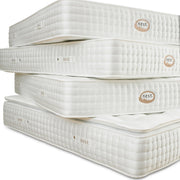
If you're wondering whether your mattress will actually work with a TV bed, the short answer is: certainly, yes. TV beds are built to work with standard UK mattress sizes, and the mattress itself has very little to do with how the TV mechanism operates. The part that can be affected by your mattress is the base - specifically, if you've chosen an ottoman TV bed for the extra storage space, where a heavier or thicker mattress means the gas-lift struts have a bit more to lift. In this guide, our experts will walk you through exactly what affects TV bed and mattress compatibility, what to look for when choosing a new mattress, and which of our own mattresses pair best with our TV beds. Does mattress thickness affect a TV bed mechanism? Mattress thickness doesn't affect the TV lift mechanism itself. On an ottoman TV bed, the TV cabinet and storage base are powered by two separate mechanisms that work entirely independently, so choosing a thicker or thinner mattress has no bearing on how smoothly your TV rises and lowers into the footboard. Having its own dedicated motor and bracket, and sitting in its own section of the frame, the TV lift simply never comes into contact with your mattress at all. Where mattress thickness does come into play is with the ottoman storage base, if your TV bed has one. This base uses gas struts (sometimes called gas lift pistons) to counterbalance the weight of the mattress and platform above it, so you can lift the whole thing with one hand rather than straining to heave it up yourself. Think of it like the boot of a car, or the seat of an office chair - the struts hold compressed gas that does most of the physical work, meaning the mattress and base feel almost weightless as they rise. The struts are rated to handle a certain amount of weight comfortably. A standard mattress within that rated range will lift smoothly with one hand. A much heavier or thicker mattress than the frame is designed for will make the base feel stiffer to lift, even though it won't stop the mechanism from working or causing damage on its own. You may simply need both hands to guide it, rather than one. What mattress should I use with a TV bed? There's no special TV bed mattress category - any mattress that suits you as a sleeper will suit your TV bed, as long as it's the right size for your frame. Some things to consider if you're choosing a new mattress include: Sleep position - Side sleepers tend to get on better with a softer or medium mattress that cushions the shoulders and hips, while back and stomach sleepers usually need something firmer to properly support the spine. Body type - Heavier individuals generally need a firmer mattress for adequate support, while lighter individuals often find a softer option more comfortable. Mattress type - Memory foam contours close to the body and relieves pressure points, which is worth considering if you suffer from joint pain. Pocket sprung mattresses offer more airflow and a traditional, responsive bounce, so they tend to suit people who run warm at night. Hybrid mattresses combine springs with a foam or latex comfort layer, giving you the best of both worlds! Temperature - If you run hot, look out for mattresses with Coolmax or other temperature-regulating technology built into the cover, which helps air circulate rather than trap heat against your body overnight. TV bed compatible mattress: What 'compatible' actually means ‘Compatible’ simply means the mattress is the correct UK size for your TV bed frame, and a sensible weight and depth for the gas-lift mechanism to handle comfortably. It isn't a special mattress category, and you don't need to look for mattresses specifically marketed as TV bed compatible to find one that works. Our TV beds are compatible with practically all standard UK mattress sizes, from single right through to super king, so you're not restricted to a narrow range if you're bringing your own mattress across from another bed. If you'd rather not think about matching sizes and weights yourself, buying your TV bed and mattress as a bundle takes the guesswork out of it entirely - the mattress is already confirmed to fit and work with the frame. However, if you'd prefer to choose your mattress independently, that's just as straightforward: pick your frame size, then filter our mattress range by the same size, and you're good to go! It's also worth deciding upfront whether you want an ottoman TV bed with storage or a non-ottoman frame. Both are fully compatible with any correctly sized mattress; the only difference is that non-ottoman frames have a fixed, non-lifting base, so mattress weight and depth simply aren't a consideration at all. Best mattress for a TV bed There isn't a single “best” mattress for every TV bed, and the right choice depends on how you sleep, what firmness you prefer, and whether temperature regulation matters to you. However, to help narrow your options down, consider: If you sleep hot: look for a mattress with Coolmax technology or natural, breathable fillings to help regulate your temperature through the night. If you want targeted support: a posturepedic mattress is designed to provide extra support to the lumbar region, which is worth considering if you deal with lower back discomfort. If you want a plush, hotel-style feel: a pillow-top mattress adds an extra layer of cushioned comfort on top of the core support layer. If you're not sure where to start: our own Nest mattress range is handcrafted in the UK and designed specifically to pair with our TV bed frames, so comfort and fit are taken care of from day one. We also stock a range of Sealy mattresses, including orthopaedic options for extra support and hospitality-grade mattresses for a more luxurious night's sleep, as well a selection of Silentnight mattresses. Need help choosing the perfect mattress for your TV bed frame? Whichever direction you go, choosing a mattress you'd be happy with on any bed frame is the right starting point. For help choosing the perfect mattress for your new TV bed frame, or to find out more about our collection of mattresses, get in touch with our friendly team today, or visit our Haydock showroom to view our options in person and try before you buy!
Read more